




HOPEGOLD (SHENZHEN) BUSINESS MANAGEMENT CONSULTING CO.,LTD
Global professional notarization and certification service agency
Contact Us
Hotline: +86-755-28261216
Email: Bruce@hopegold.cn

Apostille vs Consular Legalization: When the Destination Is Not a Contracting Party
Apostille vs Consular Legalization: When the Destination Is Not a Contracting Party
An apostille replaces consular legalization between Contracting Parties to the 1961 Hague Convention. If the country where your document will be used is not one of them, the apostille has no effect there, and the document must go back through the older chain instead: notary, then the issuing country's foreign ministry, then the destination's own embassy. The chain is set by where the document was issued, not by where you live.
- The receiving authority asked for “legalization”, “authentication” or “attestation” and never used the word apostille.
- Your document is going to Malaysia, the UAE, Kuwait, Qatar, Jordan, Egypt, Nigeria, Kenya, Sri Lanka, Myanmar, Cambodia, Laos or Cuba.
- You saw your destination on a Hague list online, but the authority there still refused the apostille.
- You hold a Chinese or Hong Kong document and cannot tell whether you need one certificate or two.
- You have already paid for an apostille and have now been told the destination wanted something else.
If any of that sounds like your file, talk to us directly. Tell us the document type and the destination and we will tell you which chain applies before you spend anything.
1. What an apostille certifies — and what consular legalization adds
The apostille is a replacement, not an addition. Under the Convention, a document issued in one Contracting Party needs one formality only — the apostille — to be produced in another. No embassy, no consular fee, no second ministry. The certificate is a single page with ten numbered fields, attached to the document by the authority that holds the signature on file.
What it certifies is narrow, and the Hong Kong Judiciary prints the limitation on the certificate itself: “This apostille only certifies the signature, the capacity of the signatory and the seal or stamp it bears. It does not certify the content of the document for which it is issued.” An apostille does not translate anything, does not repair a defective document, and does not oblige the receiving authority to accept it. It removes one requirement — legalization — and nothing else.
In the apostille system, the last signature on your file belongs to your own government. In the consular system, the last signature belongs to the destination's government — which means the paper has to physically reach that government's office, usually an embassy in the country that issued the document.
Consular legalization is the pre-1961 chain, still in daily use. It has three links: a notary or other competent officer in the issuing state; that state's foreign ministry, or whichever ministry is responsible for the document; and the destination's embassy or consulate accredited to that state. Each link has its own form, its own fee and its own opening hours, and none of them answers for the others.
| Feature | Apostille | Consular legalization |
|---|---|---|
| Who signs last | Your own government's designated authority | The destination's embassy or consulate |
| Authorities involved | One, sometimes two | Three, occasionally four with a translation |
| Where the last step happens | In the issuing country, or by post to it | At the destination's mission accredited to the issuing country |
| Official fee | Fixed published schedule, often a few dollars | Set by each embassy, in local currency, revised without notice |
| Typical lead time | Two working days to 25 working days | One to two months once every leg is counted |
| Used when | Both countries are Contracting Parties | The destination is not, or the Convention does not operate between the two |

2. Which authority handles it: the chain follows the issuing state
Two questions settle the route, and neither of them is “where am I?”. First: which state issued the document? Second: is the destination a Contracting Party? Where you personally live changes only the postage. People get this wrong constantly, and the mistake is expensive because the first two legs are usually non-refundable.
| Document issued in | Destination is a Contracting Party | Destination is not |
|---|---|---|
| Mainland China | Additional certificate issued by the Ministry of Foreign Affairs or an authorised local Foreign Affairs Office | FAO or MFA authentication, then the destination's embassy in Beijing or a consulate in its district |
| Hong Kong SAR | Apostille from the High Court Registry, Apostille Service Office | Notary, then the Registrar's Certificate, then either the destination's consulate in Hong Kong or the Commissioner's Office of the MFA |
| United States, state document | Apostille from the state Secretary of State | State certification, then the US Department of State, then the destination's embassy in Washington |
| United States, federal document | Apostille from the Office of Authentications, US Department of State | Office of Authentications, then the destination's embassy in Washington |
| United Kingdom | Apostille from the FCDO Legalisation Office | FCDO Legalisation Office, then the destination's embassy in London, then that country's own foreign ministry |
One more layer: territory. The United Kingdom extended the Convention to 13 territories, the Netherlands to 4 and Denmark to 1. Those places are covered without being states, so a document going to, say, the Cayman Islands or Aruba is inside the Convention even though the name on your instruction sheet is not a country. Check the extension list on the HCCH status table before concluding that a destination is outside.
3. Documents required — and the version you must legalize
Both systems only touch public documents: papers emanating from a court or tribunal, administrative documents, notarial acts and official certificates. The Convention expressly excludes two categories — documents executed by diplomatic or consular agents, and administrative documents dealing directly with commercial or customs operations. If your paper falls in either group, neither an apostille nor consular legalization is the right instrument, and no amount of queuing will fix it.
The practical consequence is that a photocopy is not a public document. What gets legalized is the notarial act, the certified copy or the official certificate — never the plain copy you made at home. Each chain then asks for a slightly different bundle:
- Mainland China: a notarial certificate from a notary with foreign-related authority, issued inside the consular district of the Foreign Affairs Office you use; ID copies; a translation where the destination requires one.
- Hong Kong: the notarial certificate, plus the Registrar's Certificate that the High Court issues to the notary. On a first application the Commissioner's Office wants the original Registrar's Certificate so it can be filed; afterwards a copy is accepted.
- United States: a certified copy from the state agency that holds the record, or a properly notarized document. Federal documents must be originals or certified copies carrying an original seal and signature.
- United Kingdom: the original document. The Legalisation Office does not legalize photocopies.
Translation deserves its own warning. Several destinations require the document in their own language before the consular officer will look at it, and the translation then has to be legalized as well. Doing the translation after the final stamp means reopening a bound certificate and starting the last leg again. Ask the receiving authority which language it accepts before anything is bound.
4. Fees and processing time, chain by chain
The official fees are small everywhere. The time is not. The figures below are the published schedules of the authorities named, read on 26 October 2026; mainland fees are shown from one Foreign Affairs Office because China has no single national table — each authorised office publishes its own.
Mainland China — published schedule of a municipal Foreign Affairs Office (Chongqing, September 2026)
| Step | Official fee (per notarial certificate) | Published time |
|---|---|---|
| FAO single authentication, civil | CNY 50; expedited CNY 100 | 5 working days; 3 expedited |
| FAO single authentication, commercial | CNY 100; expedited CNY 150 | 5 working days; 3 expedited |
| Additional certificate (apostille), civil / commercial | CNY 50 / CNY 100 | 5 working days; 3 expedited |
| Forwarding to the MFA Consular Department for single authentication | Agency fee CNY 60 per booklet; CNY 30 expedited | About 2 to 3 weeks |
| Double legalization (MFA plus embassy) | Agency fee CNY 150 standard, CNY 200 expedited, plus MFA fee and embassy fee | About 1 to 2 months |
Two details that regularly change the bill. Fees are charged per notarial item, so a booklet binding two notarial acts — say a copy-certification and its translation — is billed twice, not once. And a local Foreign Affairs Office only accepts certificates from notaries inside its own jurisdiction; if you live outside it, you will be asked for a residence permit, an employment letter or six months of social insurance records before the file is even opened.
Hong Kong — three exits, three different authorities
| Destination | Who signs the last page | Fee and published time |
|---|---|---|
| A Contracting Party | Registrar, High Court (Apostille Service Office, Counter 5) | HK$125 per application; 2 working days, about 2 weeks for overseas mail; registered airmail return adds HK$15.50 |
| Not a Contracting Party, but has a consular post in Hong Kong | That consulate | Set by the consulate; apply there directly |
| Not a Contracting Party, no consular post in Hong Kong | Commissioner's Office of the MFA in the HKSAR, 42 Kennedy Road, Admiralty | HK$60 civil / HK$120 commercial for Chinese citizens; HK$185 / HK$370 for foreign citizens; HK$120 for companies registered in China, HK$370 for foreign-registered companies. 4 days, no expedited service |
The Commissioner's Office counts 24 hours as one working day and excludes weekends and Hong Kong public holidays, so a Monday submission is collected on Thursday. It also requires the Registrar's Certificate that the High Court issues to the notary — not the apostille. Those are two different documents, and sending the apostille instead is one of the most common Hong Kong refusals. Payment is accepted in cash, by WeChat Pay, Alipay or BOC Pay.
United States and United Kingdom
| Step | Official fee | Published time |
|---|---|---|
| US state certification of a state document | Set by each state; the apostille schedules we track run from US$3 to US$30 | Varies by state, from same-day at a counter to several weeks by post |
| US Department of State, Office of Authentications (44132 Mercure Cir., PO Box 1206, Sterling, VA 20166-1206) | US$20 per document, non-refundable | Within 5 weeks by mail; 7 business days for counter submissions |
| Destination's embassy in Washington | Set by the embassy | Set by the embassy |
| UK FCDO Legalisation Office | £45 standard; £35 e-Apostille; £40 next-day and £100 urgent, both for registered businesses only | Usually up to 25 working days, plus courier time; e-Apostille up to 2 working days |
| Destination's embassy in London | Set by the embassy | Set by the embassy |
5. Step by step, chain by chain
The order is not negotiable anywhere. Each authority authenticates the signature of the one below it, so a file presented out of sequence has nothing to authenticate and is returned.
Mainland China, non-Contracting destination: the notary certifies the document and binds it; the Foreign Affairs Office authenticates the notary's signature; the Ministry of Foreign Affairs, through the Consular Department at 2 Chaoyangmen Nandajie in Beijing, authenticates the result where the destination requires that level; the destination's embassy or consulate legalizes last. If the receiving authority accepts single authentication, the chain stops at step two or three and the embassy stamp is not needed.
Hong Kong: a Hong Kong notary prepares and certifies the document; the High Court issues the Registrar's Certificate confirming that notary's appointment; the destination's consulate in Hong Kong legalizes, or — where there is no consular post — the Commissioner's Office of the MFA does. Do not obtain an apostille on this route: it is the wrong certificate and the consular officer will not substitute for it.
United States: the state authority certifies a state document, or the Office of Authentications handles a federal one; the US Department of State authenticates the state certificate where the destination is not a party; the destination's embassy in Washington legalizes. Some states issue a plain certification of signature rather than an apostille when the destination is outside the Convention — Nevada, for instance, describes itself as a dual document state and issues a certification in place of an apostille for non-Hague destinations. The District of Columbia does something similar with a Foreign Certificate, which still has to go on to the Department of State.
United Kingdom — the FCDO publishes the sequence in full, and it is worth reading in their words rather than a summary:
“1. Get the document legalised by the Legalisation Office. 2. After the Legalisation Office have apostilled your document, get it stamped at the country's embassy in London. 3. Get the document, with the Legalisation Office and embassy stamps, approved by the Ministry of Foreign Affairs in the country where you have been asked for the legalisation.”
Note the third step. For a non-Contracting destination the file is not finished when the embassy in London stamps it — the destination's own foreign ministry approves it afterwards, which usually happens after the document has left the UK.
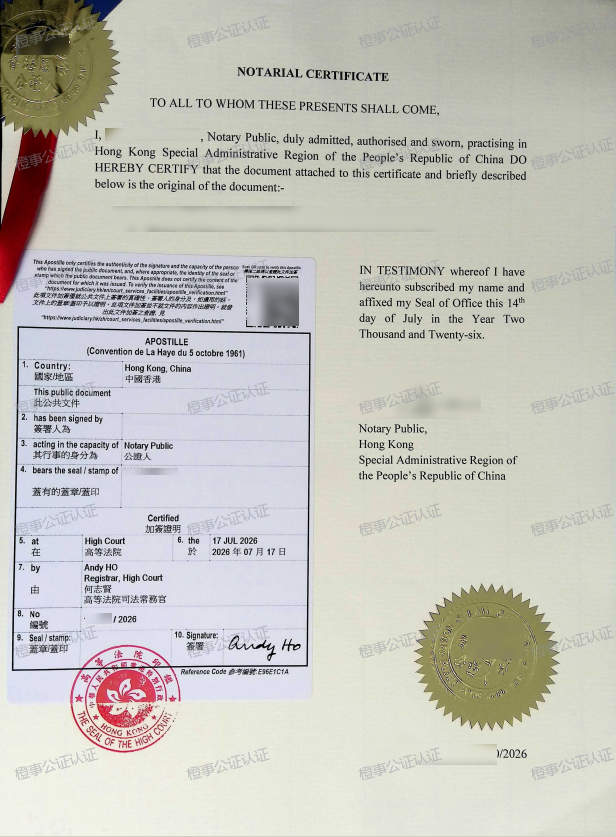
6. The step most people miss: the last leg belongs to the destination's embassy
The single most common planning error is treating the ministry stamp as the end of the job. It is not. The destination's embassy is a separate government with its own form, its own fee, its own language rule and its own opening hours, and it is under no obligation to accept what your foreign ministry has already stamped. Files are routinely refused at this last window after weeks of work upstream.
The second half of the same mistake is choosing the wrong embassy. The relevant post is the one accredited to the country that issued the document — not the one nearest to you. A Chinese document for Malaysia goes to the Malaysian mission in China, not to a Malaysian high commission in London, and certainly not to one in Kuala Lumpur. This is why the calendar, not the fee, is what breaks deadlines: if you are already abroad, the paper has to travel back to the issuing country and out again.
The UK states the limit of what a government can do for its own citizens abroad plainly: “British embassies, high commissions and consulates cannot legalise documents of any kind.” The same logic applies to every chain here — no embassy can legalize a document that has not already passed through the authority below it.
7. The Article 12 trap: India is on the list and still takes no apostille from China
This is where most online lists fail. India has been a Contracting Party since 14 July 2005, and China acceded on 8 March 2023 with effect from 7 November 2023. Both names appear on the Hague list, and yet no apostille is issued for documents going from China to India, because the Convention does not operate between them: China raised an objection under Article 12 to India's accession.
The Hong Kong Judiciary prints the consequence on its own contracting-party list, against both India and Kosovo: “No Apostille will be issued for documents intended for this destination as the Apostille Convention does not take effect between China and this country because objection has been raised under Article 12 of the Convention to China/this country's accession, as the case may be.” The High Court will not issue it, and the mainland will not either. The file has to go the consular way.
The objection is between China and India. It says nothing about whether India accepts an apostille issued in the United States, the United Kingdom or anywhere else — that is a separate question answered by the receiving Indian authority. Read the footnote against the country that issued your document, not against your own nationality.
Thailand is the mirror image and a useful contrast. Its accession took effect on 28 February 2027, so it is a party whose Convention is not yet in force. The same list carries a second footnote: apostilles destined for Thailand are issued now, under the Exception described in paragraph 77 of the 2023 Apostille Handbook, and take effect once the Convention enters into force there. A Thai-bound file can therefore be handled today rather than parked for four months.
The general lesson: read the issuing authority's own list, with its footnotes, rather than a summary table on a blog. The HCCH status table currently records 130 Contracting Parties; because Thailand's accession is not yet effective, the Convention is in force for 129 of them. Any page that gives a single round number without the footnote is worth exactly what you paid for it.
8. Mail, courier or counter: how a three-hop chain is physically moved
An apostille is one hop. Consular legalization is three, and every hop is a chance to lose the file. Each authority returns documents by its own method unless you supply a prepaid label, and a chain that is split across three envelopes arrives at the embassy with no ministry stamp attached to the page it belongs to.
- Send the set together. One envelope, one file, one tracking number. Splitting the stages means the last authority sees a loose certificate.
- Supply the return label, prepaid, in your name. Some offices refuse “bill to sender” labels outright, and a handwritten courier waybill is rejected by several agencies that accept only system-generated ones.
- Counter service exists only where it is published. A ministry counter that closes at 16:00 is a hard deadline; consular sections are worse, often accepting documents for a few hours on a few days a week, and many require an appointment booked days ahead.
- Scan at every stage. Once a consular officer binds the pages, separating them to photocopy something invalidates the certificate.
9. Where overseas applicants get stuck
Applicants outside the issuing country hit a predictable set of walls. None of them are about the law; all of them are about logistics.
- Currency and payment method. Consular fees are collected in local currency and sometimes in cash only; a foreign card may simply not work at the window.
- You cannot finish it where you are. The last leg must be performed in the issuing country. A Chinese document for Kuwait cannot be completed in Kuwait, however convenient that would be.
- Language. Some posts will not legalize a document that has not been translated into the destination's language, and the translation must itself be legalized — which means the translation has to exist before anything is bound.
- Appointment windows. A single missed window can cost a week, and windows are published in local time, not yours.
- Two holiday calendars. The chain crosses at least two, plus courier delays on both ends.
- Signatures on file. If the notary's signature is not registered with the authority above, the file stops at step two no matter how correct the document is.
10. Cost breakdown
A consular legalization is never one payment. It is four or five payments to four or five different parties, and no single party can collect the others on their behalf. Anyone quoting you one all-in number without breaking it down is either guessing or absorbing a risk they have not priced.
| Cost line | Paid to | Basis |
|---|---|---|
| Notarial certificate or certified copy | The notary or the records office | Per document, set locally |
| Ministry, FAO or High Court fee | The issuing government | Published schedule, per notarial item or per application |
| Embassy or consulate fee | The destination's mission | Set by the post, in local currency, revised with the exchange rate |
| Translation, if required | The translator, plus a notary for the translation | Per page, by language pair |
| Courier both ways | The courier | Per shipment, per hop |
| Service fee | Us | Quoted per document type, number of copies and destination — Get a quote → |
The reason a quote cannot be exact until the file is known is the third row. Embassy fees are set by the post, in the post's currency, and change without a published schedule. A figure quoted from a blog post two years old is a figure for a different destination.
When to use a service
Plenty of files are worth doing yourself, and we would rather say so. A single document, a destination with a consulate in your city and a generous deadline is a file you can walk through in a week. The calculus changes when any of the following is true:
- The last window is in a city you cannot reach, and the document would have to fly back to the issuing country and out again.
- The file has to pass two governments and a courier without you being in any of those places.
- The document is a company record, where a single formatting error means rebuilding the whole chain from the notary up.
- The receiving authority has already rejected one version and told you only that it was “not acceptable”.
- You need the document in a language the post will accept, translated and legalized in the right order.
- Your deadline cannot move, and the chain has three chances to slip.
If none of those apply, do it yourself and keep the money. If two or more apply, the arithmetic usually favours handing it over — not because the steps are hard, but because each one has a queue you cannot see.
11. Common rejection reasons
- An apostille presented to a non-Contracting authority. By far the most common. The certificate is genuine and still has no effect at the destination.
- An apostille requested for India on a Chinese document. It is never issued, so the file cannot even be started — see section 7.
- A photocopy instead of a certified copy. Both systems legalize signatures on public documents, not the copy you printed.
- A notarial certificate from outside the office's jurisdiction. A local Foreign Affairs Office only accepts notaries in its own district.
- The apostille sent instead of the Registrar's Certificate. Hong Kong's Commissioner's Office asks for the latter; they are not interchangeable.
- Translation done after the final stamp. The bound certificate has to be reopened, which voids it.
- The chain performed out of order. An embassy stamp obtained before the ministry authentication authenticates nothing and is refused.
- Name mismatches. The name on the passport, the notarial certificate and the underlying record must line up; a married name on one and a maiden name on another stops the file.
- Pages separated from a bound certificate. Once bound, the set travels as one object.
If you are looking at one of these right now, contact us with a photo of what you have and the name of the receiving authority. In most cases we can tell from the photograph which leg is missing.
12. How to verify what you were handed
An apostille is checkable. A consular legalization mostly is not, and knowing the difference saves a lot of anxiety.
- Read the ten fields. Country of issue, who signed, in what capacity, the seal, the place, the date, the number, the issuing authority's seal and signature. A missing or blank field is a defective certificate.
- Hong Kong: the Judiciary runs an online apostille verification service; the certificate number and date are enough to check.
- United States: New York apostilles issued on or after 9 April 2013 can be checked in the Department of State's online system; federal authentications can be confirmed with the Office of Authentications.
- Consular legalization: there is no central register. Verification means comparing the consular seal and signature with the post's specimen, or asking the receiving authority in advance which form it accepts.
- Keep the whole set. A consular legalization is valid only as a chain; the last stamp means nothing without the ones below it.
13. FAQ
Is an apostille the same as consular legalization?
No. An apostille is a single certificate issued by your own government under the 1961 Convention. Consular legalization is the older three-step chain ending with the destination's embassy. They are alternatives, not stages of one process.
My destination is Malaysia. Can I still use an apostille?
Not usefully. Malaysia is not a Contracting Party, and the same is true of the UAE, Kuwait, Qatar, Jordan, Egypt, Nigeria, Kenya, Sri Lanka, Myanmar, Cambodia, Laos and Cuba. The apostille may be issued, but the receiving authority has no obligation to recognise it, and in practice will not.
India is on the Hague list. Why was my Chinese apostille refused?
Because China objected under Article 12 to India's accession, so the Convention does not take effect between the two countries. Hong Kong's list marks India with an asterisk and states that no apostille will be issued for documents intended for it. The consular route applies instead.
How long does the whole chain take?
Plan on one to two months for a mainland double legalization, because the MFA and embassy legs run in weeks rather than days. Hong Kong is faster: four days at the Commissioner's Office once the notary and the Registrar's Certificate are ready. A US federal file runs about five weeks at the Department of State before the embassy leg starts.
Can the embassy legalize my document before my own foreign ministry does?
No. Each authority authenticates the signature of the one below it. An embassy presented with a document that carries no ministry authentication has nothing to verify and will return the file.
The official fees are small. Why does a service charge more?
Because the official fee is one line of five. The service covers the notary, the queue at each authority, the courier between them, the correction of a document that was refused, and the fact that someone has to be in the right city on the right morning. We quote per document type, number of copies and destination so you can compare it against doing it yourself.
Can I do it myself?
Often yes. If you are in the issuing country, the destination has a mission you can reach, and the deadline is measured in months, the steps above are all you need. The reason people hand it over is distance and the calendar, not complexity.
Tell us the document type and the country it is for, and we will reply with the exact chain, the official fees at each step, and the realistic timeline — free of charge, no follow-up calls. Ask us a question →
Sources / last verified
Every figure in this article was read from the authority that publishes it, on 26 October 2026:
- HCCH, Apostille Convention status table (cid=41): 130 Contracting Parties; China acceded 8 March 2023, in force 7 November 2023; India in force 14 July 2005; Thailand acceded 30 June 2026, in force 28 February 2027; territorial extensions — United Kingdom 13, Netherlands 4, Denmark 1.
- Hong Kong Judiciary, List of Contracting Parties to the Apostille Convention (as at 11 September 2026): the Article 12 footnotes against India and Kosovo, the paragraph 77 Exception footnote for Thailand, and the wording of the apostille limitation.
- Office of the Commissioner of the Ministry of Foreign Affairs in the HKSAR, Notice on Applying for Consular Legalization (updated 8 May 2026): the four-day service, the no-expedited rule, the fee table and the Registrar's Certificate requirement.
- Chongqing Foreign Affairs Office, Guide to Consular Authentication and Additional Certificates (3 September 2026): mainland fees and times, charged per notarial item.
- US Department of State, Office of Authentications: US$20 per document, five weeks by mail, seven business days at the counter.
- GOV.UK, Documents for British people abroad (updated 31 July 2025): the three-step legalisation process and the statement that British posts abroad cannot legalise documents.
- Nevada Secretary of State, apostille pages: the dual document state rule for non-Hague destinations.
Fees and processing times change without notice, and consular fees change with the exchange rate. Confirm the current figure with the authority before you send anything.

